Hello, my name is Dan Fitzgerald. I serve the American Lung Association as Director of Advocacy and co-lead our Smart Surfaces initiative, which is supported by the Smart Surfaces Coalition. Here at the American Lung Association, we know that when you cannot breathe, nothing else matters.
Today, I'll be sharing some practical solutions that can help mitigate excessive heat and ultimately work toward creating healthier and more resilient school environments.
So, to kick off, let's chat briefly about the problem at hand: excessive heat.
We know that two-thirds of cities across the United States are made up of roads, parking spaces, sidewalks, and roofs. These surfaces are typically dark and non-porous, or impermeable. These solid, dark surfaces contribute to urban heat, increased air pollution, flooding, and poor health.
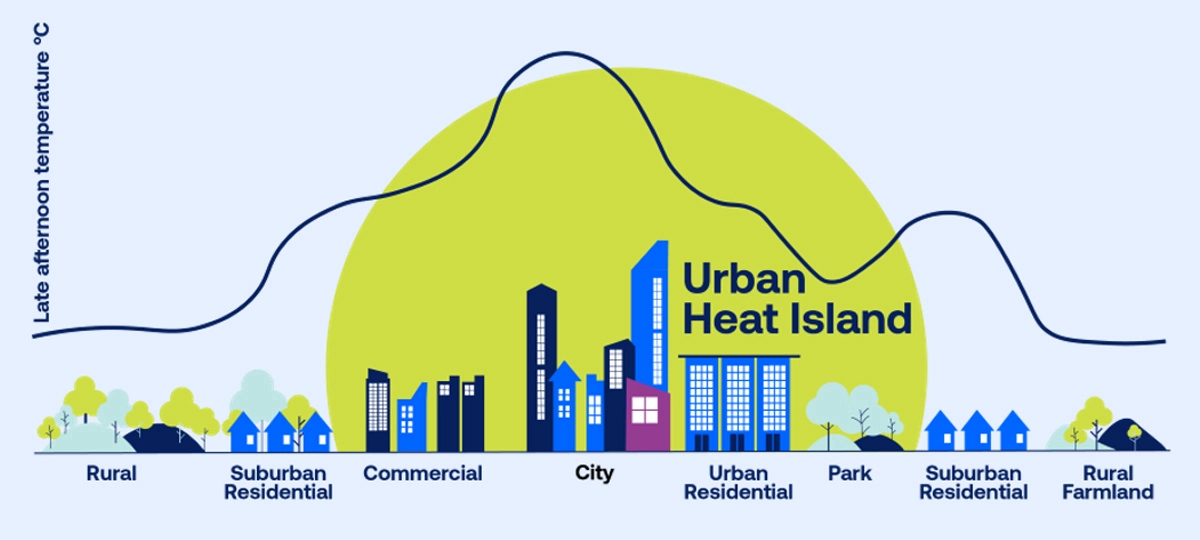
Heat islands are areas that experience higher temperatures than outlying areas. Structures such as schools and other buildings, roads, and infrastructure absorb and re-emit the sun's heat more than natural landscapes such as forests and bodies of water. Urban areas where these structures are highly concentrated and greenery is limited become islands of higher temperatures relative to outlying areas.
We know that daytime temperatures in urban areas are about 1 to 7°F higher than temperatures in outlying areas. At nighttime, those temperatures are about 2 to 5°F higher. As you can see in this graphic, excessive heat doesn't just impact the urban core; it also permeates surrounding areas across a metropolitan region.
Now that we've talked a little bit about the problem of excessive heat, let's chat about the impact on our health.
It may be hard to imagine that pollution can be invisible, but ozone began that way. As ozone concentrates and mixes with other pollutants, we often call it by its older, more common name: smog. It's currently one of the least well-controlled pollutants in the United States, and it's also one of the most dangerous.
Increased levels of heat, like those in urban cities, create dangerous ground-level ozone. Scientists have studied the effects of ozone on our health for decades and have confirmed that ozone harms people at levels currently found in the United States. It can also be deadly. When ozone is inhaled, it damages the tissue of our respiratory tract, causing irritation and inflammation similar to a sunburn of the lungs.
In addition to the negative health impacts of air pollution, we know that observed changes to our climate — such as increased temperatures, more frequent extreme weather events, and higher pollen levels — are negatively impacting our health. More extreme heat and air pollution are directly tied to numerous poor health outcomes, including but not limited to respiratory illness, allergies, heat-related illness and death, cardiovascular disease, stroke, and more.
We also know that excessive heat increases allergies. In fact, between 1995 and 2011, warmer temperatures caused the pollen season to be around 11 to 27 days longer each year.
Now that we've talked a little bit about the problem of excessive heat and its impact on our health, let's talk about some practical solutions that can help us work toward building healthier and more resilient schools and communities.
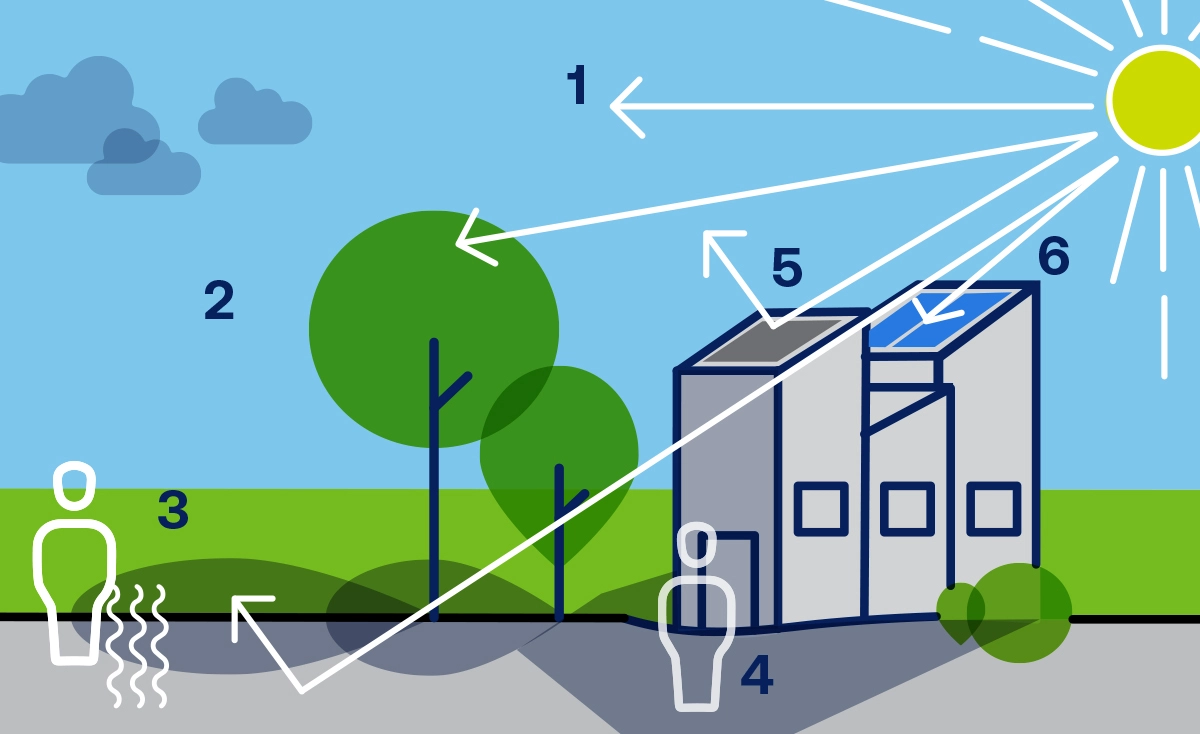
Smart surfaces encompass a suite of cutting-edge technologies, including reflective or cool roofs and pavements, green roofs, trees, solar PV, and rain gardens. They are designed to mitigate urban heat, enhance air quality, and improve public health. The addition of these transformative features to our built environment can make our schools more resilient and vibrant.
Smart surfaces have been found to cool cities by up to 5°F, deliver large reductions in flooding, and provide economic benefits to cities. They can do the same for your school district. They also have the potential to address structural and racial inequalities and advance environmental justice.
Let’s move forward and start talking about some of these smart surface solutions.
Cool roofs are light-colored so they can reflect sunlight and reduce the heating of air. Traditionally, dark-colored roofs absorb more light, radiating heat onto the building and surrounding air, increasing cooling costs and energy consumption while decreasing comfort.
Cool roads and parking lots reflect more light than dark asphalt. They reduce pavement temperature and can increase pavement lifespan.
Our next smart surface is porous pavement, which allows rain to recharge groundwater, reducing polluted stormwater runoff and flood risk. Technologies may include porous asphalt and concrete, permeable pavers, and porous grid pavers with turf or gravel added. Porous pavement can lower temperatures through evaporative cooling and acts as a filter for water, cleaning it as it passes through the soil into groundwater.
By limiting paved areas, we can improve drainage and lower surface-level heat. Concrete is responsible for around 8% of global carbon emissions, so new concrete materials are available that are carbon neutral or even carbon negative. When pavement is needed, it is better to use low- or zero-carbon concrete. Looking for opportunities to limit paving altogether can further improve drainage and reduce heat.
Green roofs are living systems that absorb rainwater, reduce heat absorption, and improve air quality. They can cool buildings, reduce stormwater runoff, and provide wildlife habitats. In fact, they often have a longer effective lifespan than traditional dark, impervious roofs.
Solar PV converts sunlight into renewable energy. It provides shade for buildings, sidewalks, and other public areas and can help schools reduce their reliance on fossil fuels.
Shade structures and sun sails prevent heat by blocking direct sunlight. Shade structures near buildings can reduce indoor temperatures by shading windows and reducing the need for air conditioning. Shade structures over outdoor playgrounds and recreational areas create more comfortable environments.
Something as simple as curtains can also help prevent heat from accumulating inside. White and light-colored curtains reflect sunlight and heat better than dark curtains. Thermal curtains with liners can reduce heat loss in colder months. Layering curtains can increase insulation. Studies show that medium-colored draperies with white plastic backings can reduce heat gain by around 33%.
Increasing green space by planting trees, shrubs, and native grasses — around parking lots, along streets, and near playgrounds — provides shade, reduces temperatures, and decreases water pollution caused by runoff during heavy rains. Trees reduce flood risk by absorbing water during storms.
Trees also convert carbon dioxide into oxygen and remove pollutants from the air. Urban greening brings numerous benefits to school environments.
Rain gardens and bioswales collect rainwater and improve drainage. They can add cooling effects to school environments as well.
Ozone levels are highest in cities because of increased temperatures from heat absorbed by roads and roofs. By incorporating trees, green roofs, and parks into school campuses, we can reduce temperatures and improve health at the same time.
For best results, we encourage exploring the combined effects of multiple smart surfaces. This could include shade structures, urban greening and tree planting, reflective window coverings, solar PV, and porous surfaces across campus.
That was a lot of information in a short amount of time. We would like to make this as easy as possible for your school district. The American Lung Association has created a School Guide to Smart Surfaces that explores these practical solutions through the lens of application within a school campus.
Through this guide, you'll learn ways to encourage student participation, gain a better understanding of health impacts and benefits, and discover low-cost or cost-neutral improvements during regularly scheduled maintenance. This guide, alongside many other tools, can be found at lung.org/smart-surfaces.
On that same page, we encourage you to hear from a fellow school district. We partnered with the Chariho Regional School District in southern Rhode Island, which has piloted several smart surface solutions. In this case study, also found at lung.org/smart-surfaces, you can hear firsthand about the impacts of reflective windows, shade structures, and tree planting on a school campus.
In this case study, we found that on an 82°F day prior to shade structure installation, surrounding surfaces were far hotter. Dark rubber, plastic, and other materials absorb heat from the sun. Metal amplifies heat dramatically. No shade means continuous direct sun exposure. Additionally, humidity — common in Rhode Island summers — increases perceived heat.
An unshaded Rhode Island playground in summer often feels dangerously hot, with surface temperatures 30 to 60°F hotter than the air. Even on an 82°F day, equipment can exceed 130°F — hot enough to cause burns and heat stress.
I’ll read a portion of a quote from representatives of the Chariho Regional School District:
“The outdoor shade structures installed at Charleston Elementary School have quickly become some of the most valuable spaces on our grounds. They provide cool, reliable protection from direct sun, allowing students to learn, gather, and play outdoors even on the warmest days. We hope this will leave students less fatigued after spending time in shaded areas and show our district's commitment to creating healthier outdoor environments. Together, these upgrades have strengthened our district's mission to provide safe, healthy, and supportive learning environments. We're proud of the measurable impacts in heat reduction and the positive effects on student wellness, and we view these enhancements as essential investments in the future of our school community.”
We hope this case study, alongside the School Guide to Smart Surfaces, will be helpful tools for your school community as you work to mitigate excessive heat through smart surfaces.
You can also find additional resources at lung.org, including a short animated video explaining smart surfaces and their health benefits, fact sheets, guidance on speaking with elected officials, and actions communities can take to mitigate excessive heat.
Before we wrap up, I’d like to briefly share another initiative for schools offered by the American Lung Association. By participating in the Clean Air School Challenge, schools can work toward improving indoor air quality.
The Clean Air School Challenge meets schools where they are in their indoor air quality and energy management journey. Participating schools receive support and guidance as they move through the three program phases: assess, plan, and act.
The program provides structured paths and support for adopting an energy-efficient indoor air quality management plan. These plans are effective tools schools can use to proactively address air quality risks, optimize building performance, achieve cost savings, and protect the health and well-being of students, staff, and visitors.
The Clean Air School Challenge is designed to meet schools where they are, whether they have experience addressing indoor air quality issues or not. Schools may start in different phases based on current progress and advance once key milestones are achieved.
Participating schools receive training, recognition, and technical assistance. They gain education and exclusive training about school-specific indoor air quality challenges, building capacity to address issues and develop management plans. The Lung Association provides technical assistance and recognition for leadership in improving indoor air quality.
Schools also have the opportunity to work with peer mentors, access other Lung Association programs and services such as lung health navigators, participate in learning collaborative cohorts, and apply for grants. Schools are eligible for up to $9,500 each, and districts can receive up to $95,000.
To sign your school up, please visit lung.org/casc to learn more about the Clean Air School Challenge.
Thank you so much for spending your time with me today to learn about practical solutions and resources that can help build healthier and more resilient schools. I hope you visit us at lung.org to learn more. Thank you.