


What Are the Types of Lung Cancer?
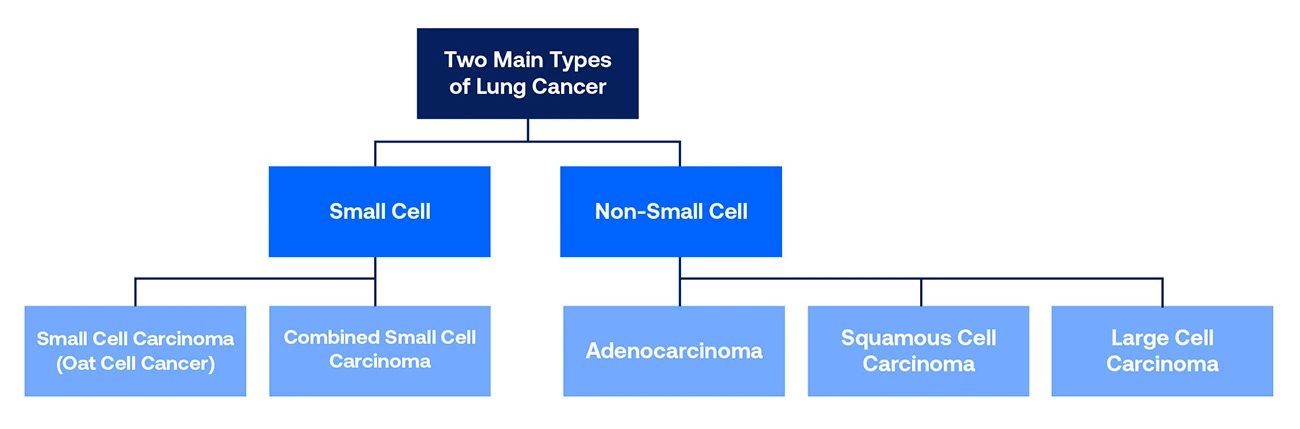
There are two main types of lung cancer: small cell lung cancer (SCLC) and non-small cell lung cancer (NSCLC). A third less common type of lung cancer is called carcinoid.
Small Cell Lung Cancer (SCLC)
There are two different types of small cell lung cancer: small cell carcinoma and mixed small cell/large cell cancer or combined small cell lung cancer. The types of small cell lung cancer are named for the kinds of cells found in the cancer and how the cells look when viewed under a microscope. Small cell lung cancer is almost always associated with cigarette smoking.
Non-Small Cell Lung Cancer (NSCLC)
Non-small cell lung cancer is more common. It makes up about 80 percent of lung cancer cases. This type of cancer usually grows and spreads to other parts of the body more slowly than small cell lung cancer does. There are three different types of NSCLC:
- Adenocarcinoma: A form of NSCLC often found in an outer area of the lung. It develops in the cells of epithelial tissues, which line the cavities and surfaces of the body and form glands.
- Squamous cell carcinoma: A form of NSCLC usually found in the center of the lung next to an air tube (bronchus).
- Large cell carcinoma: A form of NSCLC that can occur in any part of the lung and tends to grow and spread faster than adenocarcinoma or squamous cell carcinoma.
The above subtypes are the most common, but when your lung cancer tumor is looked at under a microscope, it might reveal even more specific information about the subtype. Some non-small cell lung cancers (NSCLC) are driven by specific biomarkers, or genetic changes in the tumor’s DNA that helps doctors choose treatments designed to target those changes. Testing results may include alterations such as EGFR, ALK, ROS1, and others.
Biomarker testing is now a standard part of NSCLC care, especially for adenocarcinoma, because it can open the door to highly effective targeted therapies. To learn why testing matters and what it means for treatment, visit our biomarker testing page.
Other Types of Lung Cancer
Just as each person is unique, each type of lung cancer is different. It is important to know the type of lung cancer you have, sometimes called “your lung cancer profile” because it helps determine what lung cancer treatment options are available depending on tumor type, size, stage, and overall health.
Lung cancer research is happening at a rapid pace, and your doctor should be up to date on the recommendations for your specific type of lung cancer. If you don’t feel comfortable with the answers you are receiving, do not hesitate to seek out a second opinion.
Page last updated: June 26, 2026
